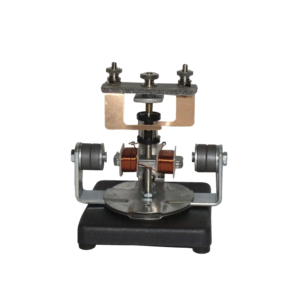
A simple form of D.C. motor with 2 pole armature wound with insulated copper wire and a permanent magnetic field provided by a removable bar magnet with a commutator and phosphor bronze brushes connected to 4 mm sockets, open construction, all parts visible.
Designed to demonstrate to implement and applications of electrical, electronic devices and simple circuits. These modules are fitted with 4 mm sockets.
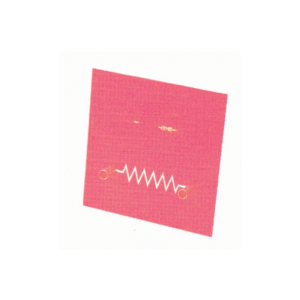
Components are directly mounted on printed PCB with diagram.Various modules are available as following Resistor
LDR
LED
Push Switch
Motor
Reed Relay
Reed Switch
Relay Nand Gate
Buzzer
Thermistor
Lamp Holder
Single Pole Double Throw Switch
Electromagnet
Power Transistor
To demonstrate the characteristics of simple and primary cells.
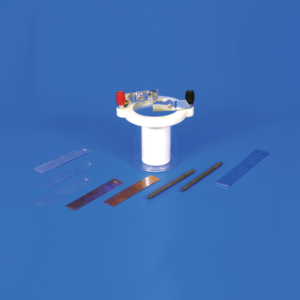
Consists of a plastic jar with a screw-on plastic rim containing two adjustable brass electrode holders, eight electrodes of different metals and a porous ceramic cup.
With Instructions.
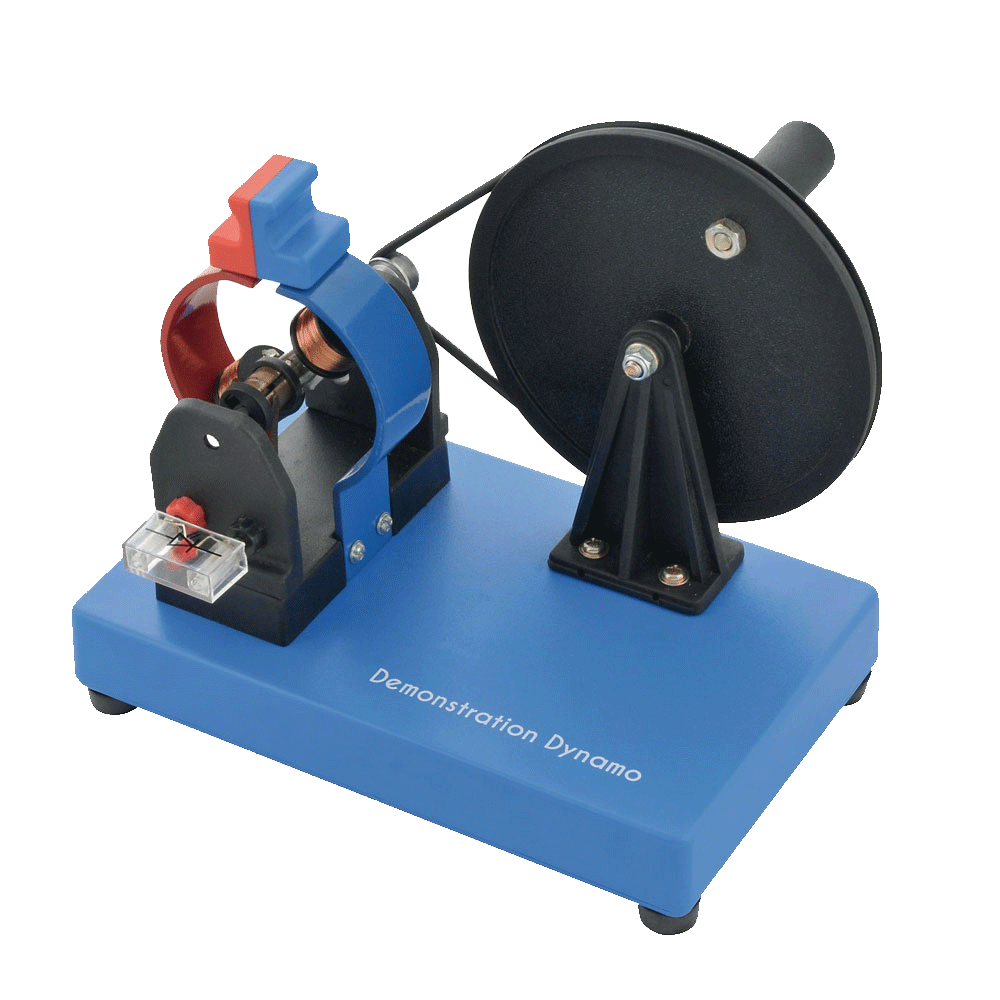
The motor consists of a two pole armature mounted between the ends of two bar magnets.
The armature has a two section commutator and a pair of slip-rings on its shaft and is so constructed that the wire cannot slip off the iron core.
The upper bearing and brushes for the commutator are mounted on a strong upright.
Separate brushes are provided for the commutator and for slip rings and each are connected to a terminal.
The magnets are held in position by thumb screws.
Comprising 1 welding coil of 5 turns on former with insulated handle and short-circuiting pins,1 annular melting trough with insulated handle to show heating by induction,1 jumping ring which is thrown clear when primary current is started and a floating ring which remains freely suspended when primary current is flowing.
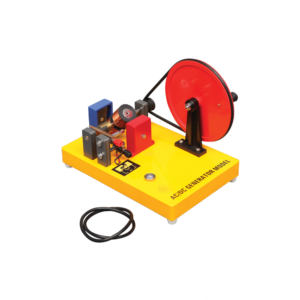
Generates both AC and DC.
When the two brushes of the generator are put in the two ends of the commutator, the output is an AC.
When the brushes are put in the middle of the commutator, the output is a DC.
Includes Instructions.
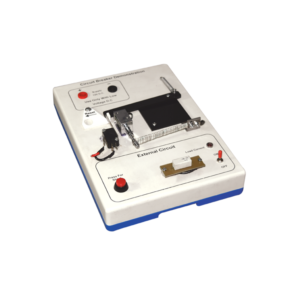
Investigate the working principle of circuit breaker type fuse with this demonstration model.
The apparatus is built on a robust plastic base and includes resistive loads to simulate external wiring circuits.
Applications of the thermal response of bimetal strips and also electromagnetism (movement from a solenoid) are clearly demonstrated in this model.
When a 12 V DC supply is connected (not supplied) the LED lights to show that current is flowing in the external circuit and the bi-metal strip can be seen to bend as its heater coil raises the temperature.
After a few minutes the bending is sufficient to trip the mechanism and the current path is broken.
At any current selection a short circuit situation can be initiated by pressing the red button and this produces an immediate response from the solenoid to disconnect the supply.

























Reviews
There are no reviews yet.