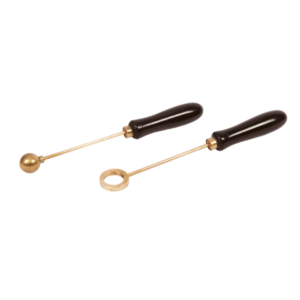
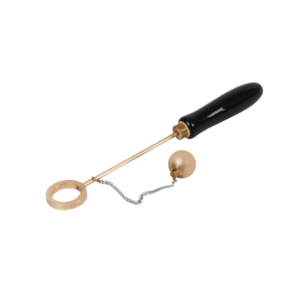
Heavy duty, both ball and ring are mounted on separate handles.
When cool, the 25 mm brass ball passes easily through the matching brass ring; when hot, it won't go through.
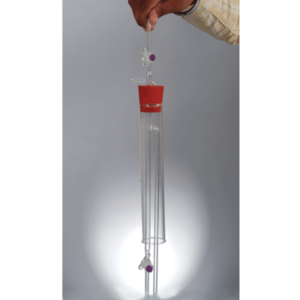
To determine co-efficient of expansion of a gas at constant pressure.
A glass U-tube with a bulb and stopcock at one end, the other limb being open.
An outlet tube from the bottom of the U tube passes through a rubber bung and has a stopcock at the end.
The stem below the bulb is graduated 3 x 0.1 ml. An inlet tube with a mohr clip also passes through the bung.
A glass water jacket encloses the U tube.
All glass parts made of borosilicate glass requires only 20 ml mercury, which is not included.
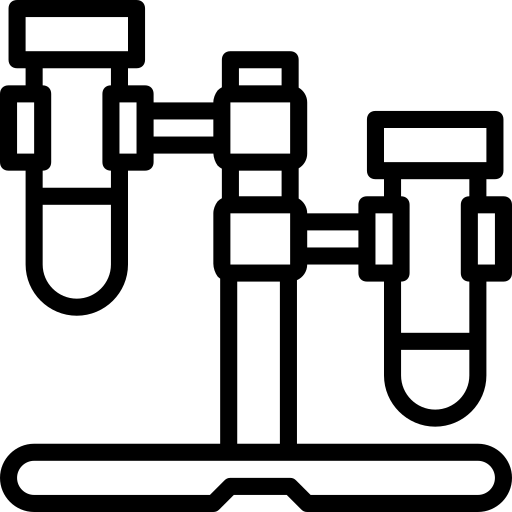
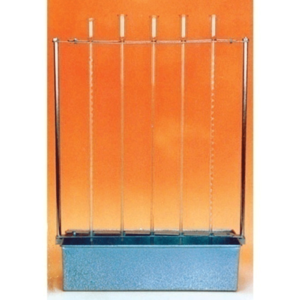
Comprising five removable glass tubes in a sliding frame and supported in a water trough.
For demonstrating the different thermal expansions of various liquids.
Comprising five glass tubes in a frame and supported in a water trough.
The frame has a special sliding arrangement with clips to hold glass bulbs with tubes.
The bulbs can be easily removed and fixed and have funnel formation on top for easy filling.
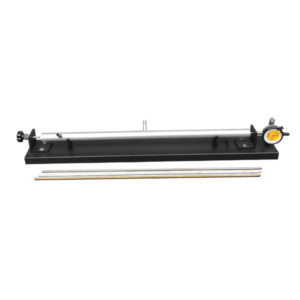
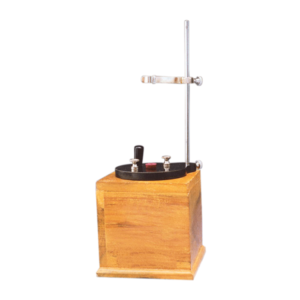
A 500 mm long metal rod is supported in a plated brass tube with three tubules for steam inlet, outlet and thermometer.
The tube is mounted on a stand with an adjusting screw at one end and a micrometer screw reading to 0.01 mm on the other, with terminals for connecting a bell or galvanometer to indicate contact.
With copper, brass and iron test rods but without thermometer.
Copper calorimeter of 75 x 50 mm resting on felt pad inside wooden polished box provided with a brass nickel plated thermometer holder and copper stirrer.
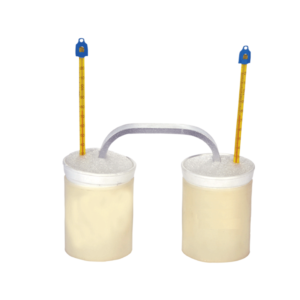
To observe heat transfer under different conditions by measuring the temperatures of the insulated containers before and after connecting them with the metal bar.
Consists of two insulated containers, two thermometers and a metal bar and instruction manual.
Demonstrates the difference in thermal conductivity of two different materials.
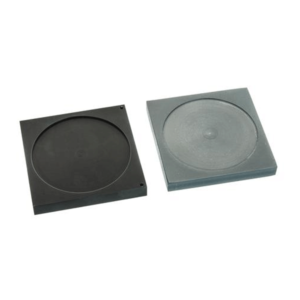
The kit consists of two identical blocks, one made of aluminum and other made of plastic.
When an ice cube is placed on aluminum it turns into water in seconds, while on plastic block it melts slowly.
The aluminum block has a larger heat capacity and a higher thermal conductivity while the plastic block has lower values of both parameters.
With instructions.





















Reviews
There are no reviews yet.