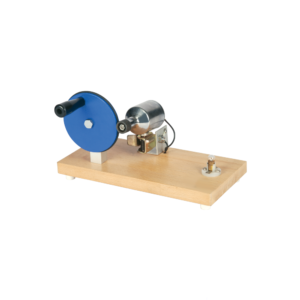
A simple form of D.C. motor with 2 pole armature wound with insulated copper wire and a permanent magnetic field provided by a removable bar magnet with a commutator and phosphor bronze brushes connected to 4 mm sockets, open construction, all parts visible.
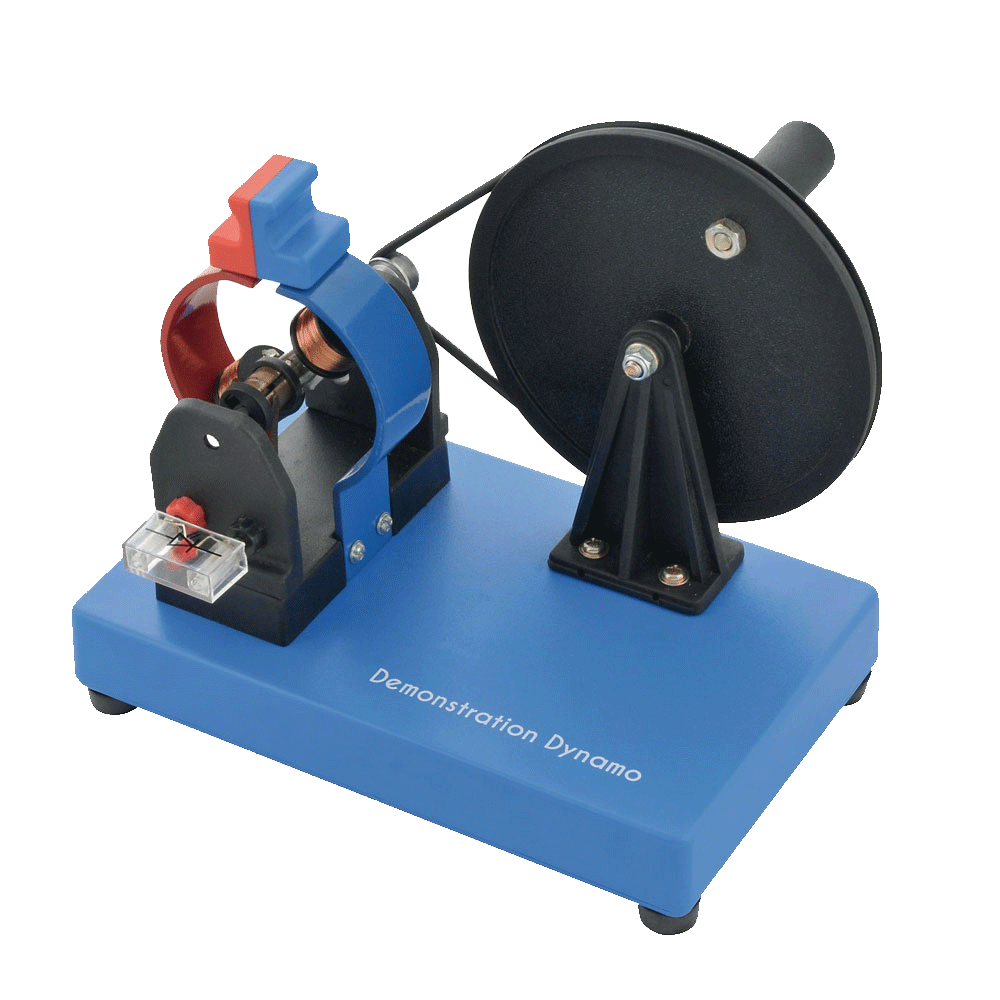
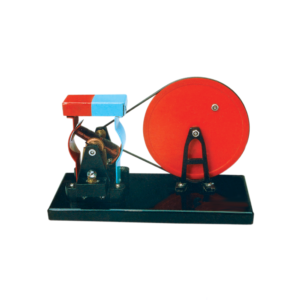
With driving wheel, to generate current, mounted on polished wood base with driving wheel in vertical position, a lamp holder and a lamp.
Output DC Current
Output both DC and AC current
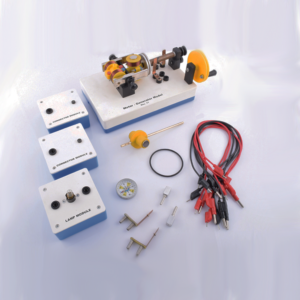
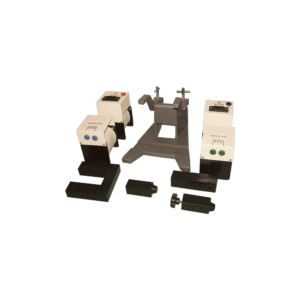
This motor-generator set gives students an insight into the physical and technical relationships on which electric motors, generators and transformers are based.
The modular system allows to set up different function models without tools: Various DC motors Series and shunt motor Synchronous motor DC generator and alternator Transformer.
This set allows the performance of 10 student experiments about the following topics:
Magnetic field of a coil
Conversion of electrical energy into kinetic energy
Commutator
Direct current motor
Synchronous motor
Series and shunt-wound motors
Electromagnetic induction
The electrical generator
Engine-generator
Transformer
A simple kit for students to gain insight into field poles, armatures and switches, one mounting base, two coils of insulated wire , field pole, mounting bracket, two armature halves, one piece of insulating tubing, motor shaft, two commutator insulators, two bronze wire brushes, two shaft supports, four paper fasteners, a AA battery holder and 6 each of screws and nuts.
Requires one AA battery, not supplied, with assembly instructions.
The dynamo model is mounted on a base with a driving wheel.
Output is through 4 mm sockets and a low voltage bulb is also provided as a simple output indicator.






















Reviews
There are no reviews yet.