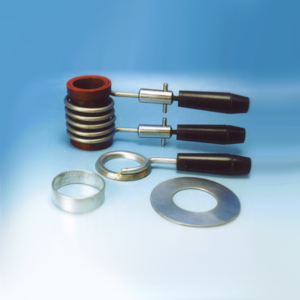
Comprising 1 welding coil of 5 turns on former with insulated handle and short-circuiting pins,1 annular melting trough with insulated handle to show heating by induction,1 jumping ring which is thrown clear when primary current is started and a floating ring which remains freely suspended when primary current is flowing.
A simple kit for students to gain insight into field poles, armatures and switches, one mounting base, two coils of insulated wire , field pole, mounting bracket, two armature halves, one piece of insulating tubing, motor shaft, two commutator insulators, two bronze wire brushes, two shaft supports, four paper fasteners, a AA battery holder and 6 each of screws and nuts.
Requires one AA battery, not supplied, with assembly instructions.
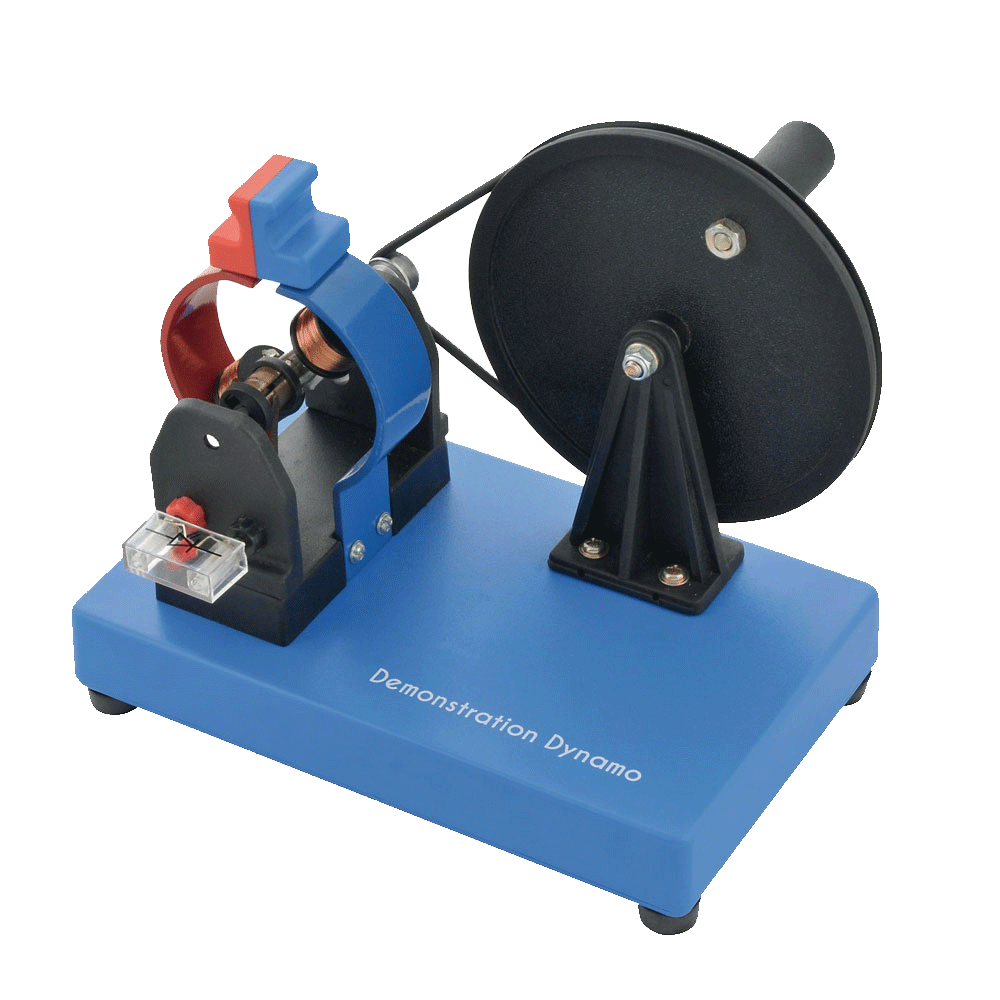
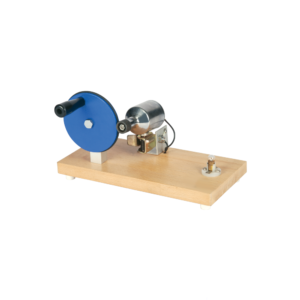
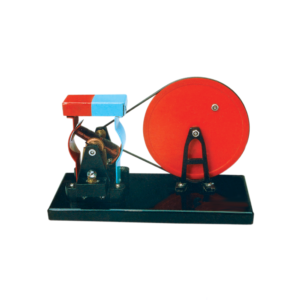
The dynamo model is mounted on a base with a driving wheel.
Output is through 4 mm sockets and a low voltage bulb is also provided as a simple output indicator.
With driving wheel, to generate current, mounted on polished wood base with driving wheel in vertical position, a lamp holder and a lamp.
Output DC Current
Output both DC and AC current
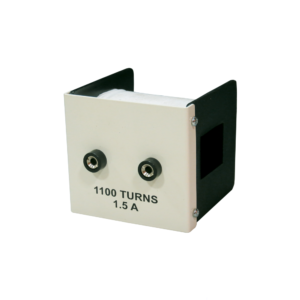
Wound on rectangular bobbin, for use with 220 – 240 V AC mains with detachable mains connector with moulded plug, A 4 mm socket is provided for earthing.
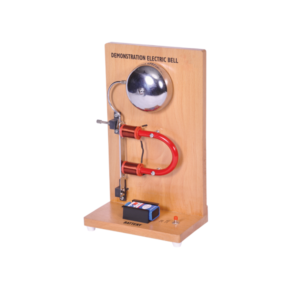
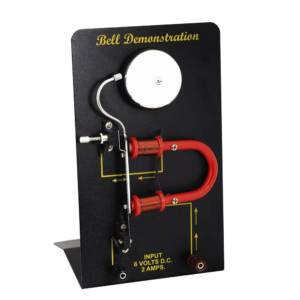
The large size of this battery operated apparatus allows students to better understand the operation of this basic circuit.
Works on 9 V Battery.
Includes Instructions.
On wooden stand.
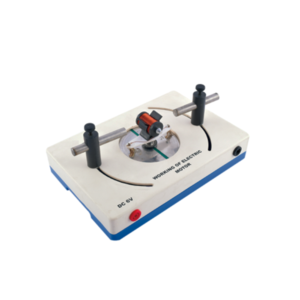
With this simple electric motor model students can investigate the relationship between voltage supplied to rotor and polarity / position of magnets.
On applying 6V DC to 4mm sockets, the rotor will begin to rotate across its vertical axis.
























Reviews
There are no reviews yet.