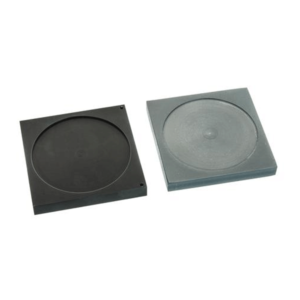
Demonstrates the difference in thermal conductivity of two different materials.
The kit consists of two identical blocks, one made of aluminum and other made of plastic.
When an ice cube is placed on aluminum it turns into water in seconds, while on plastic block it melts slowly.
The aluminum block has a larger heat capacity and a higher thermal conductivity while the plastic block has lower values of both parameters.
With instructions.
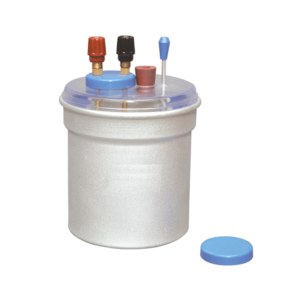
Double-Wall Calorimeter with 1.5 ohm heating coil and 4 mm standard terminals for electrical connections. Complete with insulated stirrer and single-hole rubber stopper.
Operates on 6-V DC. Instructions included.
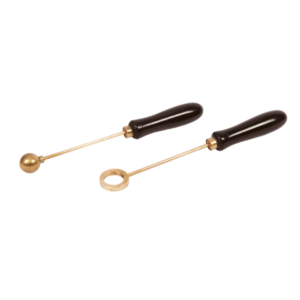
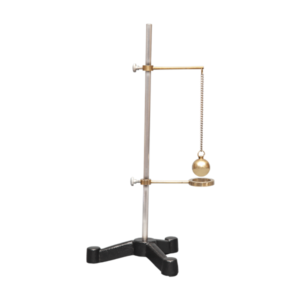
Heavy duty, both ball and ring are mounted on separate handles.
When cool, the 25 mm brass ball passes easily through the matching brass ring; when hot, it won't go through.
Consists of a thick brass calorimeter 90 x 65 mm, a bung with steam inlet and outlet tubes, a felt cover and a one liter brass sheet boiler with bung to take the steam tube.
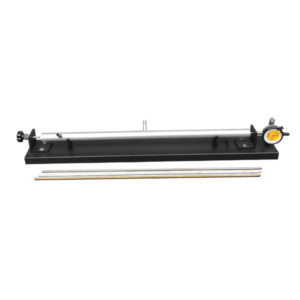
Apparatus is fitted on heavy channel base, at one end of which is an adjusting screw, at the opposite end is a micrometer screw reading to 0.01 mm for measuring the expansion.
Supplied with one each of aluminium, brass and iron expansion rods but WITHOUT thermometer.
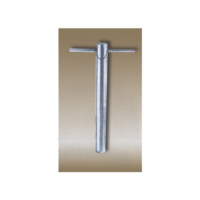
Consisting of metal rod 500 mm in length and 4.5 mm dia.
enclosed in a well - lagged, metal tube with three tubules for steam inlet, outlet and thermometer.
The metal rod to be investigated is supported in the steam jacket by detachable rubber bungs situated at each end of the tube.
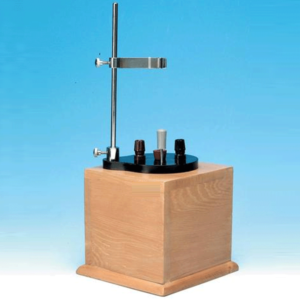
Polished aluminum container placed in an outer wooden case with thermometer, plastic top fitted with two terminals for heating coil and a hole for thermometer.
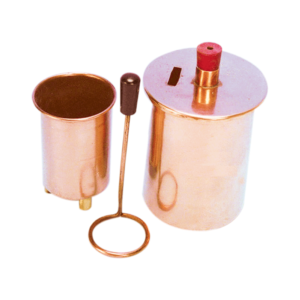
Consisting of a joint less copper calorimeter 75 x 50 mm on rubber supports, spun outer copper vessel of 100 x 75 mm diameter copper lid for outer vessel with central tubule for thermometer and slit for copper stirrer with a looped copper stirrer for the inner vessel.














Reviews
There are no reviews yet.