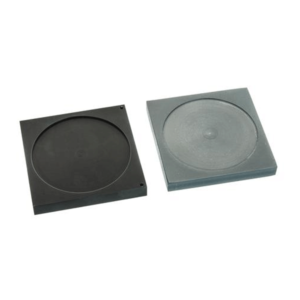
Demonstrates the difference in thermal conductivity of two different materials.
The kit consists of two identical blocks, one made of aluminum and other made of plastic.
When an ice cube is placed on aluminum it turns into water in seconds, while on plastic block it melts slowly.
The aluminum block has a larger heat capacity and a higher thermal conductivity while the plastic block has lower values of both parameters.
With instructions.
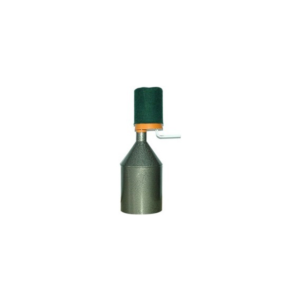
Consists of a thick brass calorimeter 90 x 65 mm, a bung with steam inlet and outlet tubes, a felt cover and a one liter brass sheet boiler with bung to take the steam tube.
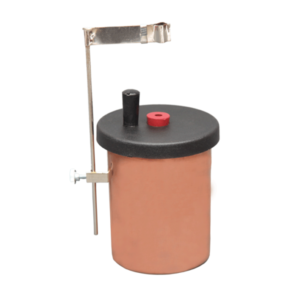
Copper calorimeter 75 x 50 mm with felt insulation, outer vessel of 100 x 65 mm size with a plastic lid having holes for thermometer and stirrer.
A thermometer holder is fixed to the outer vessel. Complete with stirrer.
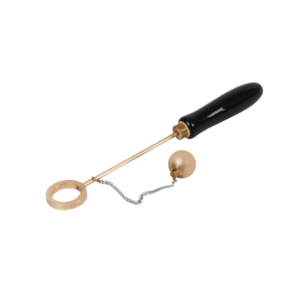
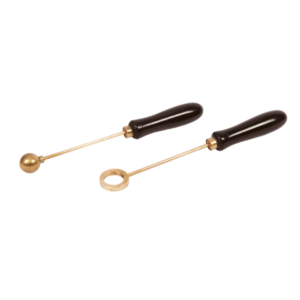
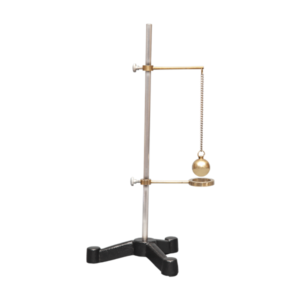
Heavy duty, both ball and ring are mounted on separate handles.
When cool, the 25 mm brass ball passes easily through the matching brass ring; when hot, it won't go through.
Specially designed for metal block calorimeters.
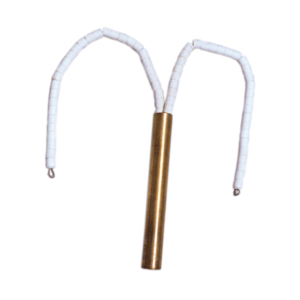
Heating element enclosed in a metal tube with two connecting leads which are insulated with heat resistant insulation. 12 V, 50 W.
To determine the co-efficient of absolute expansion of mercury.
Glass tubes with vertical limbs contained within glass jackets approx.
460 x 25 mm height x diameter are closed by bungs and fitted with inlet and outlet tubes.
Upper ends of these vertical limbs are angled on emergence from the jackets to produce two short, adjacent limbs placed against a silvered glass scale 0 to 12 cm x 1 mm.
Mounted on stand 610 x 230 mm, height x width.
Overall height 750 mm approx.
supplied without mercury.




















Reviews
There are no reviews yet.